
Our new project is the World Club Championship”
“We will increase the prize fund in Osijek once again”
“Kovtun is a major addition to Croatia. He has already shown that it is possible to return from the European Championships with four medals”
Another highly successful edition of the DOBRO World Cup is behind us. The world-class gymnastics spectacle was hosted by Osijek’s Gradski vrt arena for the 17th time last week. Nearly 250 athletes from a record 51 countries, 12 Olympic medallists, dozens of World and European Championship medallists, and two spectacular final days in a packed Gradski vrt once again confirmed why the DOBRO World Cup ranks among the world’s leading gymnastics events.
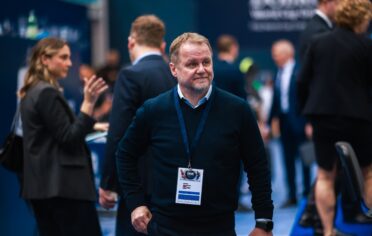
“We are extremely satisfied with the organisation, attendance and, of course, the quality of the competition. With athletes from 51 countries, we broke every record — both within the World Cup series and in the history of our own World Cup events. Looking at the athletes who reached the podium here in Osijek, we can expect many of the same names to feature at the European Championships in Zagreb this summer and at the World Championships in Rotterdam this autumn. Over the past few days, Osijek truly hosted the world’s gymnastics elite,” said Vladimir Mađarević, Director of the DOBRO World Cup Osijek.
“There is only a slightly bitter aftertaste because injuries have hit the Croatian national team hard this year and severely depleted our squad. Two of our leading gymnasts, Filip Ude and Tin Srbić, were unable to compete because of shoulder injuries, while Aurel Benović, despite an ankle injury, competed with heavy strapping and pain medication and did the best he could under the circumstances. In an extremely strong floor exercise field, he finished as the second reserve for the final. Unfortunately, he was unable to compete on vault, the apparatus on which he had won in Osijek in each of the previous two years and, of course, the apparatus on which he finished fifth at the Olympic Games.
“For us, the most important thing from a sporting perspective is now to protect the athletes from further injuries — especially any that could have long-term consequences — and to help them recover and prepare for the key events of the season. For them, that is first and foremost the European Championships in Zagreb, the biggest sporting event ever organised by the Croatian Gymnastics Federation.”
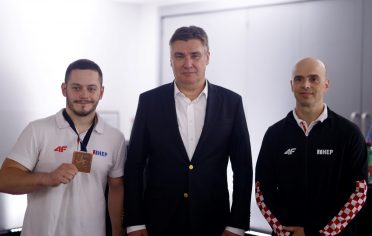
The Croatian national team, coached by Mađarević, will be strengthened in Zagreb by one of the biggest names in international gymnastics — Illia Kovtun.
“The Croatian gymnastics team is relatively small; we do not have a deep bench. Gymnastics is an individual and fundamental sport, and Croatia is a small country. Even in team sports it is difficult when a key athlete is unavailable, and in our case that impact is even greater.
“I hope that our leading athletes — first and foremost Tin Srbić, Aurel Benović and Filip Ude — will recover in time for the European Championships in Zagreb. At the same time, we are delighted that one of the world’s leading gymnasts, Illia Kovtun, will join the Croatian national team precisely for the European Championships in Zagreb. He is Ukrainian-born and recently became a Croatian citizen after living and training in Croatia for the past five years. On 10 July last year, his so-called waiting period under World Gymnastics regulations began. Following the acquisition of Croatian citizenship, he is required to wait one year before making his first appearance for our country.”
That waiting period expires on 10 July, shortly before the European Championships in Zagreb.
“This is a major addition for us. He is an Olympic silver medallist on parallel bars and finished fourth in the all-around at the Paris Olympic Games. He is also a World all-around champion and a four-time European champion. Illia has already shown that he can return from a European Championships with four medals, so naturally we have high expectations of him.
“In addition to being outstanding in the all-around, he is world-class on horizontal bar, floor exercise, pommel horse and especially parallel bars. He has enormous potential to strengthen our national team and help us maintain the continuity of strong results we have achieved. He will certainly reinforce the front line of our strongest athletes.
“He is still a very young gymnast at just 22 years of age. Alongside Aurel, who is 25, and Tin, who is 29 — and whom we hope will remain at the top level for at least another one or two Olympic cycles — we believe that new names will emerge as well.
“Over the past several years, we have invested heavily in younger age categories under the leadership of national coach Lucijan Krce, who already has extensive experience working with Tin and with young gymnasts. Kovtun’s coach, Iryna Gorbacheva, one of the world’s leading gymnastics coaches, is also providing tremendous support. She has worked with Kovtun since he was three years old. Everything he has achieved has been built through her work and planning, so we can expect a great deal from both her and her expertise.”
The World Cup in Osijek has only just concluded, but Mađarević is already turning his attention to new major projects.
“We always have new plans, not only for Osijek and our own event, but for gymnastics globally. We are constantly expanding our gymnastics story. Just as we continue to raise the level of our tournament and are now organising the European Championships, we also have ideas to use online competition and the Elevien platform to organise a World Club Championship as early as next year.
“It would be a completely new and exciting innovation in gymnastics at the level of World Gymnastics. Our concept is something similar to a ‘Champions League’, with the world’s top 32 clubs progressing through the competition before reaching semi-finals and a final that would ultimately take place live.
“One of the ideas is even to stage those final stages on the competition platform we use for our event in Osijek, given that it is one of the best — if not the best — visually organised gymnastics events in the world. The field-of-play setup and overall arena presentation are genuinely at Olympic Games level. These are significant new developments for our sport.”
And that is not all from Mađarević and his team. After already offering athletes twice the financial rewards available at other World Cup events and introducing the first-ever prize money for coaches, they now intend to increase those amounts even further.
“The next step is to increase the prize fund. We still have a year until the next edition of the World Cup, but we already need to begin discussions with the private sector and sponsors, particularly because the Croatian Government has provided companies with a major new incentive through additional year-end tax relief.
“The previous 18%, together with the additional 18% introduced by the decision that came into force on 1 January this year, means a total tax relief of 36% on funds allocated to sport. I believe that is an enormous boost for sport and something we need to make the best possible use of.
“We also need to change some of the defensive narratives surrounding our sport — that we are on the margins, that there is no money, that we are poor, that we work extremely hard but nobody recognises it. Osijek is changing that. We in Croatia are changing that, and we will continue to do so.”
Mađarević therefore expressed his gratitude to everyone who has supported the ideas of his team throughout the years.
“None of our ideas could ever be realised without companies from the private sector that recognise what we are doing. First and foremost, there are Žito Group and the DOBRO brand, which for years have supported our efforts to change things and continuously raise standards. DOBRO is also the main sponsor of the European Championships in Zagreb. I must also thank Zagrebačka banka, which has provided us with strong support for many years.”
Zagrebačka banka explained why it has continued to support this major sporting project over the years.
“For many years, the DOBRO World Cup has demonstrated that Slavonia is capable of hosting top-level global sporting events. As a long-standing partner of the project, we are proud to support an event that promotes excellence and the constant pursuit of higher standards, while making a significant contribution to the visibility and development of the region. Through this project, as well as the many other initiatives we support in Slavonia, we strive to be a reliable partner in the development of the local community,” said Boris Runje, Director of the Eastern Croatia Regional Centre.
“I would also like to thank the Government of the Republic of Croatia, the Ministry of Tourism and Sport, Osijek-Baranja County, the City of Osijek, the Croatian National Tourist Board, the Osijek-Baranja County Tourist Board, the Osijek Tourist Board, as well as our partners Europlakat, Jamnica, HEP, JANAF and many others who have recognised our vision and energy,” Mađarević added.
Marijo Možnik, President of the Croatian Gymnastics Federation, said that the success of the DOBRO World Cup was precisely what gave the Federation the confidence to bid for the European Championships. A large part of the Osijek organising team will now be involved in delivering the competition in Zagreb.
“Osijek has accumulated tremendous organisational experience over the past 17 years, so almost the entire Osijek team will move to Zagreb, while some of them are already working intensively on the event.
“Of course, the organisation will also be reinforced by a large team from the Croatian Gymnastics Federation. There are 80 gymnastics clubs in Croatia and many highly capable people who can contribute their knowledge and experience to these European Championships. We have tried to bring everyone together so that we can create a European spectacle unlike anything seen before.
“We are not satisfied with simply delivering an event that goes ‘OK’. We want to take it a step further. And we have already done so, because for the first time in the history of the European Championships, we will be providing prize money for athletes — something that has never previously been offered at a European Championships.”
Zagreb will also form part of a broader European sporting programme, with Birmingham and Paris simultaneously hosting the European Championships in the other two core sports, athletics and swimming.
“Bringing three fundamental sports together on one shared European platform gives all of them greater marketing exposure in terms of visibility and television audiences. We are proud that Zagreb and Croatia are part of such a major European sporting story this year.
“At Arena Zagreb, we will effectively have four competitions in one: the Men’s and Women’s European Championships, at both senior and junior level. That means almost 14 days of top-level sporting spectacle.
“The dates may not be ideal in some respects, given that the event takes place in August when many people are away on holiday, but we hope the spectacle we are preparing will attract spectators from all across Europe.
“Tickets are already on sale and, according to the information I have received, a significant number have already been sold. We have divided the Arena in half, with a spectator capacity of 5,000 seats, which I believe we will have no difficulty filling.
“Osijek has shown year after year that Gradski vrt can be filled to capacity. I have no doubt that Zagreb will fill the Arena as well,” concluded Vladimir Mađarević.